The Lockly Vision Elite combines two essential front-door gadgets, a video doorbell and a smart lock, into one device. It’s a space-saving solution that promises AI-powered security, remote access, and a cleaner look than mounting separate units. But does this dual-function hardware hold up for homeowners who need reliable performance and straightforward installation? This review digs into what sets the Vision Elite apart, how well it works in real-world conditions, and whether it’s worth the investment for a DIY install or a professional upgrade.
Table of Contents
ToggleKey Takeaways
- The Lockly Vision Elite combines a 1080p video doorbell and smart lock in one device, eliminating the need for separate installations and reducing complexity for DIY homeowners.
- With five access methods including a 3D fingerprint sensor, scrambled PIN Genie keypad, and smartphone app control, the Vision Elite offers flexible and secure entry options for families and Airbnb hosts.
- Installation takes 30-45 minutes for most DIYers with basic tools, requiring no electrical wiring or permits since it replaces a standard deadbolt.
- The Lockly Vision Elite’s rechargeable camera battery lasts 2-4 months with moderate use, while the lock mechanism runs 6-12 months on four AA batteries.
- Motion detection works reliably but can trigger on passing cars and shadows; the app’s adjustable motion zones require tuning to avoid notification fatigue.
What Makes the Lockly Vision Elite Different from Other Smart Locks
Most smart locks either replace the deadbolt or attach to the existing one. The Lockly Vision Elite takes a different route by integrating a 1080p HD video doorbell directly into the lock body. That means one device handles both visitor monitoring and access control, no separate doorbell wiring or mounting required.
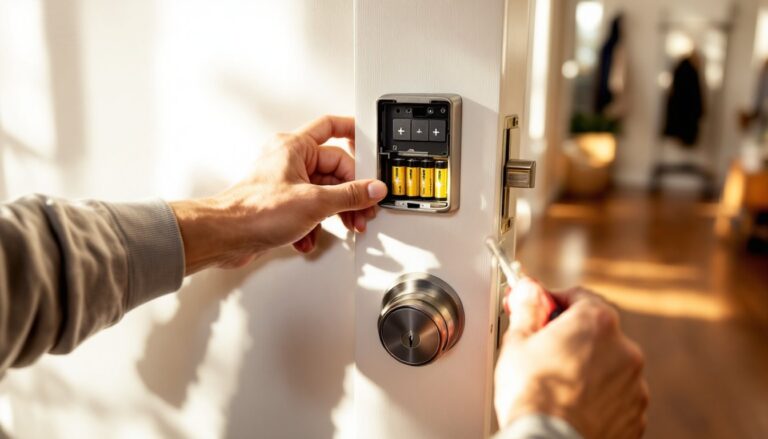
This combo approach reduces installation complexity. Instead of drilling for two devices, running separate power sources, and syncing multiple apps, homeowners get a unified system. The Vision Elite mounts like a standard electronic deadbolt and uses four AA batteries for the lock mechanism, plus a rechargeable battery pack for the camera and Wi-Fi functions.
The lock also features a 3D fingerprint sensor embedded in the touchscreen. Unlike optical fingerprint readers, the Vision Elite uses capacitive technology that reads fingerprint depth, making it harder to spoof with photos or molds. It’s overkill for most residential settings, but it adds a layer of biometric security that’s rare in the smart lock category.
Another standout: Patented PIN Genie keypad. Instead of a static number layout, the digits scramble with each use, reducing the risk of someone deducing the code from fingerprint smudges or shoulder-surfing. For DIYers concerned about family members or contractors accessing the home, this feature offers peace of mind without adding cost or complexity.
Key Features and Technology Behind the Vision Elite
Integrated Video Doorbell and Smart Lock Combo
The Vision Elite’s 1080p camera has a 160-degree field of view, covering most standard porches and walkways. It includes motion-activated recording, two-way audio with noise cancellation, and night vision using infrared LEDs. Video clips store locally on a 32GB microSD card (included) or upload to Lockly’s cloud service with an optional subscription.
Unlike standalone video doorbells that require hardwiring to a 16-24V AC transformer, the Vision Elite runs on a rechargeable lithium-ion battery pack. Lockly estimates 3-4 months per charge depending on activity level. Frequent motion events and live-view checks drain it faster. Homeowners can recharge via USB-C without dismounting the entire lock, just pop out the battery cartridge.
One quirk: the camera doesn’t continuously record. It wakes on motion or doorbell press, then rolls for 30 seconds. If someone loiters longer, the system sends additional alerts but doesn’t stitch clips together automatically. That’s fine for package deliveries or quick visitor interactions but less ideal for monitoring extended activity.
Advanced Security Options and Access Control
The lock supports five access methods: fingerprint, PIN code, physical key, smartphone app, and voice commands via Amazon Alexa or Google Assistant. The fingerprint sensor stores up to 99 prints, and the keypad allows up to 99 PIN codes, plenty for large families, Airbnb hosts, or service providers.
For temporary access, the Lockly app lets homeowners generate one-time or recurring eKeys. These digital keys work via Bluetooth or Wi-Fi and can be time-restricted (e.g., weekdays from 8 AM to 5 PM for a housekeeper). The app logs every unlock event with a timestamp and method, so it’s easy to track who came and went.
The auto-lock feature engages the deadbolt after a set delay (5 to 180 seconds). It’s useful for homeowners who forget to lock up, though it does rely on battery power, if the batteries die, the lock defaults to the physical key. The Vision Elite meets ANSI/BHMA Grade 2 certification for residential security, which is solid for most homes but not as robust as Grade 1 locks used in commercial settings.
The lock also includes tamper alerts. If someone tries to force the bolt or remove the exterior assembly, the system sends a push notification and sounds an alarm. The alarm isn’t loud enough to replace a dedicated security siren, but it’s enough to spook casual intruders.
Installation Process: What Homeowners Need to Know
The Vision Elite replaces a standard single-cylinder deadbolt with a 2-3/8″ or 2-3/4″ backset. It fits doors 1-3/8″ to 2″ thick, the range that covers most residential entry doors. If the existing deadbolt matches those specs, installation is straightforward: remove the old lock, insert the new bolt assembly, mount the exterior and interior plates, then secure with the provided screws.
Lockly includes a paper drilling template to mark screw holes, but if the old deadbolt’s holes don’t align perfectly, homeowners may need to drill new pilot holes. A 3/32″ drill bit works for the mounting screws. The exterior housing is heavy, about 4.5 pounds, so holding it in place while aligning screws takes patience. Having a second person steady the lock makes the job easier.
The trickiest part is routing the ribbon cable that connects the exterior camera/keypad to the interior battery pack. The cable threads through the deadbolt hole, and it’s easy to pinch or crimp if not careful. Smart home installations often trip up DIYers on cable management: take time to ensure the cable sits flat and doesn’t get caught under the bolt mechanism.
Once mounted, the lock requires Wi-Fi setup via the Lockly app (iOS and Android). The app walks through connecting to a 2.4 GHz network (the lock doesn’t support 5 GHz), registering fingerprints, and setting up PIN codes. The fingerprint calibration takes 5-10 scans per finger to build a reliable profile.
One snag: the lock must stay within strong Wi-Fi range for video features and remote access. If the router is more than 20-30 feet away or behind thick walls, expect connectivity hiccups. Some users solve this with a mesh Wi-Fi system or range extender, but that’s an extra expense.
No electrical wiring is needed, and no permits are required for lock replacement, this is a cosmetic swap, not structural work. Total install time for a DIYer with basic tools: 30-45 minutes. If the door prep is off or the existing holes don’t match, it can stretch to 90 minutes.
Real-World Performance and User Experience
The fingerprint sensor is fast, unlock happens in under one second once calibrated. Accuracy is high in dry conditions, but wet or greasy fingers reduce recognition rates. In those cases, the PIN Genie keypad is the fallback, and the scrambled layout works as advertised without slowing down entry.
Video quality is sharp during the day. The 1080p feed captures faces clearly within 10 feet, and the wide-angle lens covers stairs and side approaches. Night vision is adequate for identifying people within 8-10 feet but gets grainy beyond that. Two-way audio has a slight delay (about one second), which is normal for Wi-Fi-based doorbells but can make conversations feel choppy.
Motion detection triggers reliably but can be oversensitive. Passing cars, tree shadows, and pets all set it off, leading to notification fatigue. The app offers adjustable motion zones to exclude problem areas, but tuning them takes trial and error. Some users disable motion alerts entirely and rely on the doorbell press and scheduled access logs instead.
Battery life for the lock mechanism (four AA batteries) runs 6-12 months depending on usage. The rechargeable camera battery lasts 2-4 months with moderate activity, about 10-15 motion events per day. If the door sees heavy traffic or frequent live-view checks, expect closer to 6-8 weeks. Recharging takes about 3 hours via USB-C.
The app interface is straightforward but not polished. Video playback loads slowly, and the timeline view for reviewing clips isn’t intuitive. For comparison, other smart lock video systems offer smoother app experiences, but Lockly’s core functionality, locking, unlocking, and access management, works without bugs.
One frustration: the lock doesn’t integrate with third-party smart home hubs like SmartThings or HomeKit. It works with Alexa and Google Assistant for voice commands, but those integrations are limited to locking and checking lock status, no video streaming to smart displays. For homeowners with an existing ecosystem, that’s a limitation.
Conclusion
The Lockly Vision Elite delivers on its core promise: a single device that handles both smart lock and video doorbell duties. The combo design simplifies installation and reduces clutter, and the 3D fingerprint sensor plus PIN Genie keypad offer strong access control. Video quality and motion detection are solid for everyday use, though app polish and smart home integration lag behind premium competitors. For DIYers willing to work within its limitations, it’s a capable upgrade that doesn’t require running new wiring or hiring a pro.