The Amazon Smart Thermostat launched as a no-frills, sub-$100 alternative to pricier models from Nest and Ecobee, targeting homeowners who want basic scheduling and voice control without the premium price tag. In 2026, it remains one of the most affordable smart thermostats on the market, but “affordable” doesn’t always mean “worth it.” Can a budget device deliver real energy savings and reliable performance, or are you better off spending more upfront? This review digs into real-world installation experiences, day-to-day performance, and whether the Amazon Smart Thermostat actually lives up to its energy-saving claims.
Table of Contents
ToggleKey Takeaways
- The Amazon Smart Thermostat delivers solid value under $80, making it the most affordable smart thermostat for homeowners prioritizing cost-effective scheduling and Alexa voice control.
- Installation is DIY-friendly for most users thanks to the included C-wire adapter and step-by-step app guidance, though complex HVAC systems or high-voltage wiring require professional help.
- Energy savings average around $50 per year compared to non-programmable thermostats, with utility rebates potentially covering the entire cost in many regions.
- The Amazon Smart Thermostat excels in reliable performance and Alexa integration but lacks advanced features like room sensors, geofencing, and multi-stage HVAC support available in premium competitors.
- This budget device works best for single-stage heating and cooling systems in Alexa households; Google Home and Apple HomeKit users should consider alternatives.
What Makes the Amazon Smart Thermostat Stand Out
The Amazon Smart Thermostat’s biggest selling point is its price, typically under $80, often bundled with Alexa devices or utility rebates. It’s manufactured by Resideo (the company behind Honeywell Home), which gives it solid hardware credibility even though the budget positioning.
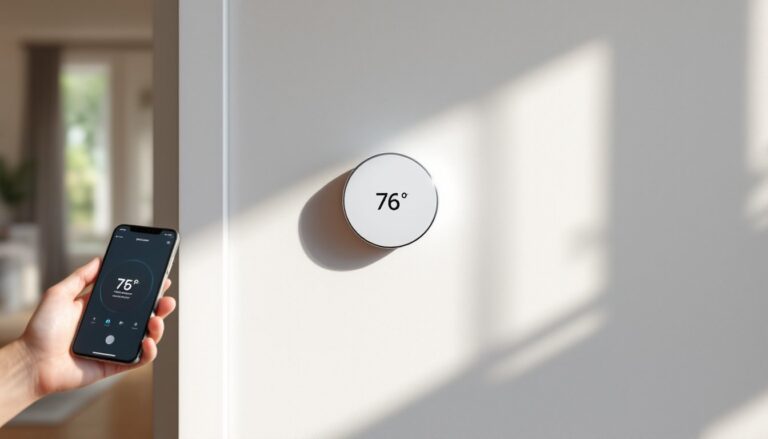
The unit works with Alexa voice control out of the box, letting users adjust temperature, create routines, or check current readings without touching the device. There’s no display beyond a small LED ring, which keeps the design minimal but means you can’t see the current temp at a glance. The thermostat supports single-stage heating and cooling systems, plus heat pumps with auxiliary heat, but won’t work with multi-stage HVAC, electric baseboard, or 120V systems.
It includes a C-wire adapter in the box, which is a big deal for older homes. Many legacy thermostats ran on just R and W wires, but smart models need continuous power. The included adapter lets most users tap into the C-wire at the furnace without hiring an HVAC tech, though you’ll need to feel comfortable working inside your air handler.
Compared to competitors, the Amazon model skips features like room sensors, touchscreens, and geofencing. It’s Alexa-native, so Google Home or Apple HomeKit users are out of luck. But for straightforward scheduling and voice control in an Alexa household, it covers the basics without the complexity.
Installation Process: DIY-Friendly or Professional Help Needed?
Amazon markets this as a DIY install, and for most homeowners with compatible HVAC systems, it genuinely is. The packaging includes a compatibility checker card and a setup guide, plus the Alexa app walks you through wire-by-wire instructions with photos.
Before you start, turn off power at the breaker to your HVAC system, not just at the thermostat. Use a non-contact voltage tester to confirm the wires are dead. Label each wire as you disconnect the old thermostat: the Amazon unit uses standard terminal labels (R, W, Y, G, C). If your old thermostat has jumper wires between R and Rc, you’ll remove those, the Amazon model handles that internally.
The trickiest part is the C-wire adapter installation if you don’t have an existing C-wire. You’ll need to access your furnace or air handler, locate the control board, and connect the adapter per the included diagram. This involves working inside a live electrical panel (after killing power, obviously) and routing a wire back to the thermostat. If you’re comfortable installing a ceiling fan or replacing an outlet, this is doable. If electrical work makes you nervous, hire an HVAC tech, expect to pay $100–$150 for the service.
Once wired, the thermostat powers on and prompts you to connect via the Alexa app. The pairing process is straightforward: scan a QR code, connect to Wi-Fi, and answer a few HVAC system questions. Total install time runs 30–60 minutes for a straightforward swap, or up to two hours if you’re installing the C-wire adapter for the first time. Detailed reviews, including installation walkthroughs and compatibility insights, confirm the process is manageable for most DIYers with basic tool skills.
Required tools: Phillips screwdriver, wire stripper (if extending wires), drill and level (for new mounting), voltage tester.
Safety note: If your system uses high-voltage wiring (240V baseboard heat, for example), this thermostat won’t work, and you shouldn’t attempt the install. Consult an electrician.
Performance and Smart Features in Real-World Use
Day-to-day, the Amazon Smart Thermostat is reliable but bare-bones. Temperature control is accurate within ±1°F, and the unit responds quickly to manual or voice adjustments. The lack of a screen means you’ll use the Alexa app for most interaction, checking current temp, tweaking schedules, or reviewing energy reports.
Scheduling is simple: create daily routines with wake, leave, return, and sleep periods. The thermostat learns nothing on its own, so you set the schedule manually. This is less sophisticated than Nest’s learning algorithm or Ecobee’s occupancy sensors, but it’s also more predictable. Your schedule stays put until you change it.
Alexa integration is the standout feature. Voice commands work seamlessly: “Alexa, set the thermostat to 68,” or “Alexa, what’s the temperature upstairs?” If you have Alexa routines, you can tie temperature changes to other triggers, like dropping the temp when your smart lock engages at bedtime. Comparisons across leading smart thermostats show the Amazon model holds its own for voice control but lags behind in adaptive features.
The Alexa app provides basic energy reports, monthly summaries of runtime and estimated savings compared to a non-programmed thermostat. These reports are helpful for spotting trends but don’t break down costs by day or compare against actual utility bills. There’s no geofencing, so the thermostat won’t adjust automatically when you leave home unless you set up a departure routine manually.
One quirk: the LED ring glows blue when Alexa is listening, which some users find distracting at night. There’s no way to disable it without losing voice control entirely.
Energy Savings: Does It Actually Lower Your Bills?
Amazon claims the thermostat can save an average of $50 per year on energy costs, based on EPA Energy Star estimates for programmable thermostats. That figure assumes you’re replacing a manual or non-programmable unit and that you stick to an efficient schedule.
In practice, savings depend heavily on your habits and HVAC efficiency. If you already used a programmable thermostat and kept a reasonable schedule, don’t expect dramatic drops. But if you’ve been manually adjusting a 20-year-old Honeywell round dial, the difference is real, especially if you were heating or cooling an empty house during work hours.
The C-wire adapter ensures consistent power, which prevents the thermostat from ghost-heating (briefly firing the furnace to recharge a battery, common in battery-powered models). This alone improves efficiency in older systems.
Many utility providers offer rebates for Energy Star thermostats, sometimes covering the full cost of the Amazon unit. Check your local provider’s website before buying, rebates can range from $25 to $100, making the device essentially free in some regions.
Keep in mind that savings estimates don’t account for regional climate, insulation quality, or HVAC age. A leaky 1970s ranch with a 15-SEER furnace will see different results than a tight 2010s build with a high-efficiency heat pump. The thermostat optimizes schedules, but it can’t fix poor insulation or an oversized HVAC system.
Pros and Cons Based on Homeowner Experiences
What Users Love About the Amazon Smart Thermostat
Price and value. At under $80 before rebates, it’s the cheapest entry into smart home climate control. Homeowners who just want scheduling and voice control without paying $200+ for a Nest consistently praise the cost-to-feature ratio.
Simple setup. Most users complete the install in under an hour. The included C-wire adapter eliminates the biggest barrier to DIY smart thermostat installation, and the Alexa app’s step-by-step guidance is clearer than most competitors’.
Alexa integration. Voice control works flawlessly, and the ability to tie temperature adjustments into broader Alexa routines (like “Good Morning” or “Leaving Home”) adds real convenience for existing Alexa households.
Reliable performance. The Resideo hardware is solid. Users report consistent operation with few connectivity drops or calibration issues. In-depth testing from sources like Digital Trends confirms the unit’s day-to-day reliability across various HVAC configurations.
Common Complaints and Limitations
No display. The lack of an on-device readout frustrates users who want to glance at the current temperature without pulling out a phone. The LED ring shows heating/cooling status but nothing else.
Alexa-only ecosystem. If you use Google Home or Apple HomeKit, this thermostat won’t integrate. There’s no workaround, and it’s a dealbreaker for households committed to other platforms.
Limited HVAC compatibility. Single-stage systems only. No support for multi-stage heat pumps, dual-fuel systems, or zoned HVAC. Check compatibility carefully before buying, returns due to incompatibility are common.
No remote sensors or geofencing. The thermostat has one temperature sensor in the unit itself. If your HVAC return is in a different room, temperature readings may not reflect living spaces. Ecobee’s remote sensors solve this: the Amazon model doesn’t offer that option.
Basic scheduling. Manual schedule creation only, with no learning or adaptation. If your routine changes frequently, you’ll be editing the schedule by hand. Nest’s auto-learning spoils users: the Amazon model requires more input.
The Amazon Smart Thermostat is a solid choice for homeowners who want straightforward smart control at a low price. It’s not feature-rich, and it won’t suit complex HVAC setups or multi-platform smart homes. But if you have a compatible single-stage system, use Alexa, and prioritize value over bells and whistles, it delivers reliable performance and real energy savings. The DIY install is genuinely accessible for most users, and utility rebates often make the upfront cost negligible. Just manage your expectations, this is a budget device with budget limitations.