A dead smart lock battery at the wrong moment isn’t just inconvenient, it can lock you out of your own home. Kwikset smart locks are reliable workhorses in the connected home ecosystem, but like any battery-powered device, they need occasional maintenance. The good news? Replacing the batteries is straightforward enough for anyone comfortable with a screwdriver. Most Kwikset models give clear warning signs before they die completely, and the swap takes less than five minutes once you know the process. This guide walks through identifying low-battery symptoms, selecting the right battery type, and executing a clean replacement without resetting your lock or losing programmed codes.
Table of Contents
ToggleKey Takeaways
- Kwikset smart locks emit distinct low-battery warning signs—such as beep patterns, red LED flashing, and app notifications—giving you 6-12 months between battery replacements depending on usage.
- Replace your Kwikset smart lock battery with four AA lithium batteries instead of alkaline to extend battery life 2-3x longer and maintain consistent voltage performance.
- Kwikset smart lock battery replacement is a straightforward 3-5 minute process that requires only fresh AA batteries and a Phillips-head screwdriver, with no need to reprogram access codes or re-pair your smart home connection.
- Install batteries correctly by matching polarity indicators in the battery compartment, and perform a test lock-unlock cycle immediately after replacement to confirm functionality and hub connectivity.
- Extend your Kwikset smart lock battery lifespan to 10-14 months by optimizing smart home polling intervals, disabling auto-lock if unnecessary, updating firmware regularly, and lubricating the deadbolt mechanism annually.
- Avoid rechargeable NiMH batteries in your Kwikset smart lock, as their lower 1.2V nominal voltage can trigger false low-battery warnings and erratic performance compared to alkaline or lithium alternatives.
Signs Your Kwikset Smart Lock Needs a Battery Replacement
Kwikset builds multiple warning systems into their smart locks, so you rarely get caught off guard. Pay attention to these indicators:
Low battery warning beep: Most Kwikset models emit a series of beeps when unlocking or locking the door once batteries drop below 30%. The pattern varies by model, Premis and Halo Touch emit three quick beeps, while the 910 and 914 deadbolts give five slower beeps.
LED flash pattern: The interior keypad or touchscreen flashes red instead of the usual green or amber during operation. On the Halo and Halo Touch models, the exterior LED ring may pulse red briefly after authentication.
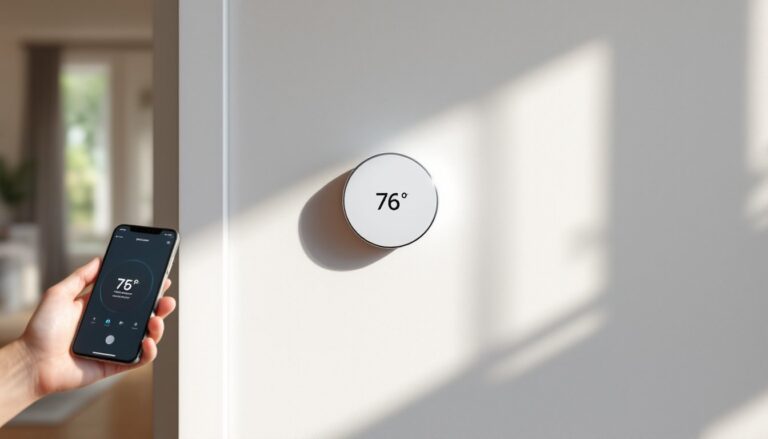
App notifications: If your lock connects via Z-Wave, Zigbee, or WiFi (like the Halo Touch or Halo WiFi), you’ll receive low-battery alerts through your smart home hub or the Kwikset app. These typically trigger around the 20-25% battery mark.
Sluggish motor response: The motorized deadbolt takes noticeably longer to throw or retract. You might hear the motor struggling or stuttering during operation.
Intermittent connectivity: Smart features like remote unlock or status updates become unreliable. The lock may drop offline from your hub intermittently.
Most Kwikset smart locks run 6-12 months on a fresh set of batteries, depending on usage frequency, wireless protocol power draw, and whether you’re using alkaline or lithium cells. Heavy users, those unlocking 10+ times daily, should expect the shorter end of that range.
What Type of Batteries Does Your Kwikset Smart Lock Use?
Battery requirements vary by Kwikset model, but the company standardizes around readily available sizes:
Four AA batteries: The most common configuration, used in the Kwikset Halo, Halo Touch, Halo WiFi, Premis, Obsidian, 909, 910, 912, 913, and 914 models. The battery compartment sits on the interior assembly.
One 9V battery (older models): Some legacy Kwikset electronic locks from pre-2015 use a single 9V. If you have an older SmartCode deadbolt without smart home connectivity, check the interior cover.
For battery chemistry, alkaline batteries (Duracell, Energizer, or similar name brands) work fine and meet manufacturer specs. But, lithium AA batteries significantly outperform alkaline in these applications:
- Lithium cells last 2-3x longer in high-drain devices like motorized locks
- They perform better in extreme temperatures (important for exterior doors in hot attics or cold climates)
- They maintain voltage more consistently as they discharge, preventing premature low-battery warnings
- They’re lighter and less prone to leakage
Kwikset explicitly supports lithium batteries in their documentation. Expect to pay roughly $8-12 for a four-pack of lithium AAs versus $4-6 for alkaline, but the extended lifespan and reliability justify the cost for most users.
Avoid rechargeable NiMH batteries. They operate at 1.2V nominal voltage versus 1.5V for alkaline or lithium, which can cause erratic performance or premature low-battery warnings even when the cells are fully charged. Many users smart lock performance issues when mixing battery types or using rechargeables not rated for the voltage requirements.
Step-by-Step: How to Replace Batteries in Your Kwikset Smart Lock
Battery replacement takes about three minutes. You won’t need to reprogram access codes or re-pair the lock to your smart home system, those settings live in non-volatile memory that survives power loss.
Tools and materials:
- Four fresh AA batteries (lithium recommended)
- Phillips-head screwdriver (for some models)
- Microfiber cloth (optional, for cleaning contacts)
Removing the Interior Cover
The interior assembly houses the batteries and motor mechanism. Different Kwikset models use slightly different retention methods:
For Halo, Halo Touch, Halo WiFi, Premis, and Obsidian:
- Locate the battery cover on the interior assembly (the side facing inside your home). It’s the large rectangular section at the bottom or top of the unit, depending on model orientation.
- Press the release tab, usually a small button or sliding latch marked with a battery icon, and slide or lift the cover away. No tools required.
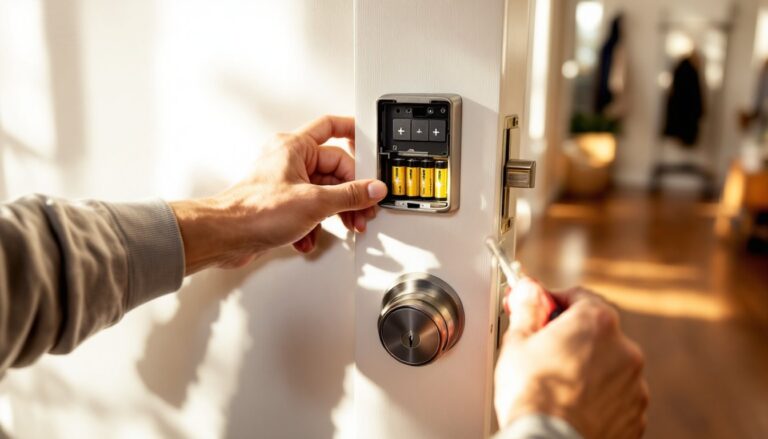
- The battery tray slides out or tilts down, exposing four AA batteries in series.
For SmartCode 909, 910, 912, 913, 914:
- Find the Phillips-head screw at the bottom of the interior cover.
- Remove the screw completely (it may remain captive in the cover on some models).
- Lift the cover straight up and away from the lock body. The battery compartment is immediately visible.
If your lock has been installed for a while, check the battery compartment for corrosion or residue. White or green crusty deposits indicate a leaking battery. If present, remove the old batteries immediately, clean the contacts with a cotton swab dipped in white vinegar or rubbing alcohol, and dry thoroughly before installing new batteries.
Installing New Batteries Correctly
Polarity matters. Installing batteries backward won’t damage the lock (it simply won’t power on), but it wastes time troubleshooting.
- Note the + and – markings molded into the battery tray or printed on a label inside the compartment.
- Install batteries one at a time, matching the polarity indicators. Most Kwikset locks alternate orientation: two batteries with positive terminals facing one direction, two facing the opposite.
- Press each battery firmly into place. They should sit flush in the compartment with no tilting or gaps.
- If your lock has a removable battery tray (Halo series), slide it back into the housing until it clicks.
- Replace the battery cover, ensuring it seats completely. For screw-retained covers, tighten the Phillips screw snugly but don’t overtighten, you’re threading into plastic.
The lock should beep and flash green (or blue, depending on model) once it powers up. This takes 2-5 seconds. On Halo models, you’ll see the exterior LED ring illuminate briefly.
Test immediately: Lock and unlock the deadbolt using the keypad. Enter a valid user code, the bolt should throw smoothly without hesitation. If you have app connectivity, verify the lock shows online and reports correct status. Some users following battery replacement guides find that a single lock-unlock cycle re-establishes hub communication if the lock briefly dropped offline.
Troubleshooting Common Battery Replacement Issues
Lock doesn’t power on after battery installation:
- Verify battery polarity. Pull one battery and double-check orientation against the molded indicators.
- Confirm batteries are fresh. Test them in another device or use a multimeter (should read 1.5V+ per cell for alkaline, 1.7V+ for lithium).
- Clean battery contacts if you see any discoloration or film. Use a pencil eraser or fine sandpaper to remove oxidation, then wipe with alcohol.
- Perform a hard reset by removing all batteries, waiting 30 seconds, then reinstalling. This clears any residual charge in capacitors.
Lock powers on but won’t accept codes:
- This usually indicates corrupted memory during power transition. Press and hold the Program button (small recessed button on the interior assembly) for 30 seconds to perform a factory reset. Note: this erases all user codes and requires re-pairing to your smart home hub.
Motor sounds weak or deadbolt doesn’t fully extend:
- Door misalignment creates excessive friction. With the door open, manually turn the deadbolt thumb-turn. It should rotate smoothly with minimal resistance. If it binds, the strike plate may need adjustment.
- Verify the deadbolt extension isn’t obstructed by paint buildup or debris in the strike plate opening.
Low-battery warning persists with new batteries:
- You likely installed rechargeable NiMH cells. Their lower nominal voltage (1.2V vs 1.5V) triggers the low-battery circuit even at full charge. Replace with alkaline or lithium.
Lock won’t reconnect to smart home hub:
- Most Kwikset smart locks maintain Z-Wave/Zigbee pairing through battery changes, but occasionally the radio module needs a manual wake-up. Consult your hub’s interface for a “heal network” or “rediscover devices” function. The lock should reappear within 2-3 minutes.
Tips to Extend Your Kwikset Smart Lock Battery Life
Use lithium batteries. This single change can double your replacement interval from 6 months to 12+ months, particularly in climates with temperature extremes.
Optimize smart home polling. If your lock connects via Z-Wave or Zigbee, excessive status polling by your hub drains batteries faster. Most hubs default to checking lock status every 5-15 minutes. If you don’t need real-time status updates, increase the polling interval to 30-60 minutes in your hub’s device settings.
Disable auto-lock if you don’t need it. The auto-lock feature (which automatically re-locks the door after 30 seconds) cycles the motor frequently. If you’re home most of the time and manually lock up before bed, disabling this feature significantly reduces motor runtime. Many smart home enthusiasts find that manual locking works fine for their routine.
Reduce keypad backlight brightness. On models with adjustable LED brightness (Premis, Halo Touch), lower settings consume less power. The difference isn’t dramatic but adds up over thousands of unlock cycles.
Keep firmware updated. Kwikset periodically releases firmware updates that improve power management. For WiFi-connected models (Halo WiFi), updates install automatically. For Z-Wave/Zigbee models, check for updates through your hub’s interface every few months.
Avoid mixing old and new batteries. When replacing batteries, swap all four at once. Mixing depleted and fresh cells forces the new batteries to compensate for the weak ones, reducing overall lifespan and causing uneven discharge.
Monitor temperature exposure. Batteries degrade faster in extreme heat. If your interior lock assembly sits near a south-facing window or attic access that gets direct sun, consider window treatments or relocating heat sources.
Lubricate the deadbolt mechanism annually. Use a dry graphite lubricant or PTFE-based lock lubricant (never WD-40 or oil-based products, which attract dust). A smooth-operating bolt requires less motor torque, reducing current draw per cycle. Apply lubricant to the bolt shaft and internal mechanism by removing the exterior assembly, consult your model’s installation manual for disassembly steps.
With proper battery choice and these efficiency tweaks, expect 10-14 months between changes even with daily use.