Upgrading to a smart thermostat is one of the easiest home improvements that pays immediate dividends. Unlike programmable thermostats that homeowners rarely bother to program correctly, smart thermostats learn routines, adjust automatically, and can be controlled from anywhere. They’re not just tech gadgets, they’re practical tools that reduce energy waste, lower monthly bills, and make climate control genuinely hands-off. Whether someone is retrofitting an older HVAC system or optimizing a new build, the benefits extend beyond convenience into real cost savings and environmental impact.
Table of Contents
ToggleKey Takeaways
- Smart thermostats reduce energy consumption by 10–23% annually, saving households an average of $130–$150 per year on heating and cooling costs.
- Learning algorithms enable smart thermostats to adapt automatically to your schedule and preferences within a week, eliminating the need for manual daily adjustments.
- Remote smartphone control and voice assistant integration allow you to adjust temperature from anywhere, preventing energy waste when away from home.
- Smart thermostats prevent approximately 1–2 tons of CO₂ emissions annually per household, making them one of the highest-impact climate upgrades available.
- Most smart thermostat installations take 30–60 minutes with basic tools and work with standard residential HVAC systems, with professional support available if needed.
Save Money with Lower Energy Bills
The most immediate reason to install a smart thermostat is the reduction in heating and cooling costs. Studies consistently show that smart thermostats reduce energy consumption by 10–23% annually compared to manual or basic programmable models. That translates to roughly $130–$150 per year in savings for an average household, though results vary by climate zone, insulation quality, and system efficiency.
Smart thermostats achieve these savings through precision scheduling and occupancy detection. Instead of heating or cooling an empty house for hours, the unit detects when occupants leave and automatically enters an eco mode. Many models use geofencing, tracking a smartphone’s location, to trigger temperature adjustments when homeowners are within a set radius of the house. This eliminates the common mistake of leaving the AC blasting all day or forgetting to turn down the heat before a weekend trip.
Some utility companies offer rebates of $50–$100 for installing ENERGY STAR-certified smart thermostats, which further shortens the payback period. Homeowners should check with their local provider before purchasing. Most energy-efficient models reviewed for 2026 include detailed energy reports that break down usage by day, week, or month, making it easy to spot inefficiencies or compare pre- and post-installation performance.
Enjoy Effortless Comfort and Convenience
Smart thermostats eliminate the daily thermostat dance, no more walking to the hallway to adjust settings multiple times a day. Temperature control becomes a background task handled by automation and intuitive apps.
Most units allow homeowners to create detailed schedules that vary by day of the week. A typical setup might warm the house 30 minutes before the morning alarm, drop the temperature during work hours, then raise it again before arrival home. Unlike old programmable models with cryptic button sequences, these schedules are built through smartphone apps with drag-and-drop simplicity.
Remote Control and Smartphone Integration
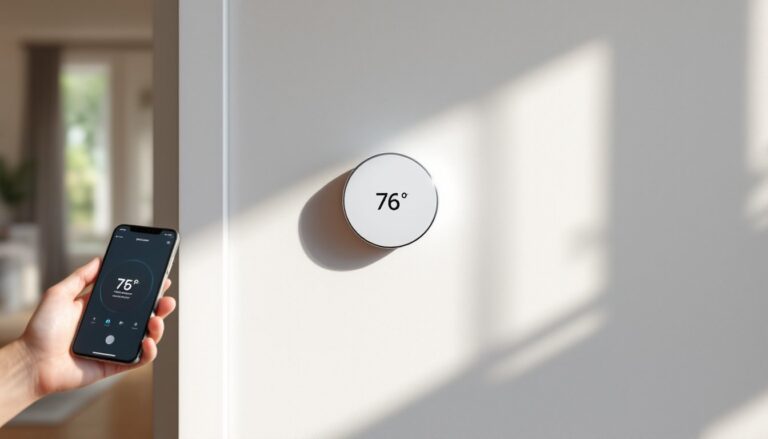
Remote access is the standout convenience feature. Homeowners can adjust temperature from the grocery store, the office, or vacation. Forgot to turn down the heat before leaving for a long weekend? A few taps fix it. Coming home early from a trip? Warm up the house en route.
Integration with voice assistants, Amazon Alexa, Google Assistant, Apple HomeKit, and Samsung SmartThings, means hands-free control. A simple voice command adjusts settings without getting off the couch. For those building out a broader smart home ecosystem, thermostats tie into routines: “Goodnight” can lock doors, turn off lights, and lower the thermostat in one command.
Smart thermostats also provide real-time alerts for maintenance issues. If the system runs longer than expected or temperatures deviate from the set point, the app sends a notification. Early detection of a failing blower motor or clogged filter prevents costly emergency repairs.
Reduce Your Environmental Footprint
For homeowners concerned about sustainability, smart thermostats offer measurable environmental benefits. Heating and cooling account for nearly 50% of a home’s total energy use, making HVAC optimization one of the highest-impact changes available.
By reducing runtime through smarter scheduling and occupancy sensing, smart thermostats cut greenhouse gas emissions proportional to energy savings. A household saving 20% on HVAC energy prevents roughly 1–2 tons of CO₂ emissions annually, depending on regional power sources. That’s equivalent to planting around 50 trees or taking a car off the road for several months.
Many leading smart thermostats for 2026 include eco modes and seasonal tips that prioritize efficiency. Some models display a “leaf” or green indicator when settings fall within an energy-saving range, gamifying conservation. Detailed energy reports make it easy to track month-over-month improvements and set reduction goals.
Pairing a smart thermostat with other efficiency upgrades, air sealing, attic insulation rated R-38 to R-60, or a high-efficiency heat pump, multiplies the environmental impact. The thermostat becomes the control center for a more efficient system overall.
Smart Learning Features That Adapt to Your Lifestyle
The “smart” in smart thermostat refers to machine learning algorithms that observe behavior and adjust settings automatically. After about a week of use, learning thermostats begin to anticipate preferences without manual input.
These units track when occupants wake up, leave for work, return home, and go to bed. They note preferred temperatures for different times of day and gradually build a custom schedule. If someone consistently overrides a setting, say, turning up the heat on Saturday mornings, the thermostat learns and incorporates that preference.
Occupancy sensors use motion detection, smartphone location, or both to determine when the house is empty. Unlike rigid schedules that assume a 9-to-5 routine, adaptive learning handles irregular schedules, shift work, or spontaneous travel. The system doesn’t waste energy heating or cooling an unoccupied home, even if departure times vary.
Some advanced models integrate weather forecasts and adjust preemptively. If a cold front is arriving in the afternoon, the thermostat might warm the house slightly earlier using cheaper off-peak electricity. Others factor in humidity, adjusting not just temperature but perceived comfort.
Homeowners who prefer manual control can disable learning features. The flexibility to toggle between automated and manual modes makes smart thermostats suitable for both tech enthusiasts and those who just want a better programmable thermostat.
Easy Installation and Compatibility with Most HVAC Systems
Most smart thermostats are designed for DIY installation and work with the majority of residential HVAC systems. The process typically takes 30–60 minutes and requires only a screwdriver and basic wire labeling.
Before purchasing, homeowners should verify compatibility. Most manufacturers provide online tools that ask questions about the system type, forced air, heat pump, radiant, dual fuel, or zoned, and the existing thermostat wiring. Standard systems with 24V wiring and a C-wire (common wire) have universal compatibility. Older homes without a C-wire may require a power adapter kit (often included) or professional installation to add one.
Typical installation steps:
- Turn off power at the breaker to the HVAC system.
- Remove the old thermostat and photograph the wiring for reference.
- Label each wire with the provided stickers (R, W, Y, G, C, etc.).
- Mount the new base plate using provided screws and anchors. Use a level, most smart thermostats have built-in bubble levels.
- Connect wires to corresponding terminals on the new thermostat.
- Snap on the display and restore power.
- Follow the on-screen setup to connect to Wi-Fi and configure preferences.
Some systems, millivolt fireplaces, high-voltage baseboard heaters, or proprietary systems, aren’t compatible with standard smart thermostats. In those cases, consult an HVAC technician. Multi-zone systems may require multiple smart thermostats or a compatible central controller.
Most top-rated smart thermostats in 2026 include installation videos and in-app guidance. If someone encounters issues, customer support can often troubleshoot remotely.
Safety note: Always shut off power before handling HVAC wiring. Use a non-contact voltage tester to confirm wires are de-energized.
Conclusion
Smart thermostats deliver a rare combination of immediate payback, ongoing savings, and improved daily comfort. They’re straightforward enough for most DIYers to install in an hour, yet sophisticated enough to optimize HVAC performance year-round. For homeowners looking to reduce energy waste without sacrificing convenience, upgrading to a smart thermostat is one of the highest-value improvements available in 2026.