Managing an Airbnb rental means juggling check-in times, coordinating key handoffs, and hoping guests don’t lose the spare you stashed under the planter. A smart lock eliminates those headaches by letting hosts create temporary access codes, monitor entry remotely, and skip the awkward “I’m stuck in traffic, can you wait?” texts. Whether someone’s running one vacation rental or managing a portfolio across town, the right smart lock turns guest access from a logistical puzzle into a tap on a phone screen. This guide walks through the features that matter most for Airbnb hosts and spotlights three solid options that balance security, ease of use, and guest-friendliness.
Table of Contents
ToggleKey Takeaways
- A smart lock for Airbnb eliminates key exchanges and enables hosts to generate temporary, time-limited access codes for each guest, eliminating the need for physical key handoffs or lockbox management.
- Remote access, activity logging, and anti-tamper features make the best smart lock for Airbnb properties a security upgrade that simplifies tracking guest entries and allows property management from anywhere.
- The Schlage Encode Plus offers commercial-grade security and Wi-Fi connectivity with no subscription fees, while the Wyze Lock Bolt provides an affordable surface-mount option under $80, and the Yale Assure Lock 2 supports up to 250 codes for multi-property managers.
- Choose a Wi-Fi-enabled smart lock rather than Bluetooth-only models to enable remote code programming without being within 30 feet of the property.
- Proper installation requires checking door measurements, reinforcing the strike plate and hinges, and avoiding overtightening screws on motorized locks to prevent binding or premature failure.
- Test your smart lock setup thoroughly before the first guest arrives, including remote unlock, activity logs, and auto-lock features, then document the code workflow with clear guest instructions.
Why Smart Locks Are Essential for Airbnb Hosts
Traditional locks demand physical key exchanges, meeting guests at odd hours, hiding keys in lockboxes, or relying on neighbors to help with check-ins. That workflow breaks down fast when managing back-to-back bookings or dealing with late-night arrivals. Smart locks solve this by generating unique access codes for each reservation. A host programs a four- or six-digit PIN tied to the guest’s stay dates, shares it via the booking platform, and the code automatically expires after checkout. No key cutting, no lockbox fumbling, no re-keying between tenants.
Remote access is the second big win. If a cleaning crew shows up early or a maintenance contractor needs entry, the host can unlock the door from anywhere with cell service. Most smart locks log every entry and exit with a timestamp, so there’s a clear record of who came and went. That’s useful for resolving disputes, tracking service visits, or confirming a guest checked out on time.
Security gets an upgrade, too. Lost keys mean re-keying the entire lock: a stolen code gets deleted in seconds. Many models include anti-tamper alarms, auto-lock timers (the door locks itself after 30 seconds), and low-battery warnings sent straight to a phone. For hosts managing multiple properties, centralized control through a single app beats driving across town to hand over keys or troubleshoot a lockout.
Key Features to Look for in an Airbnb Smart Lock
Not every smart lock suits short-term rentals. Look for models that support temporary access codes with start and end times, this lets hosts schedule codes to activate at 3 p.m. on check-in day and expire at 11 a.m. on checkout. Some locks cap the number of active codes (often 25 to 100), which matters if someone’s running high-turnover properties or managing long-term guests alongside weekend bookings.
Connectivity separates basic smart locks from property-management-friendly ones. Wi-Fi-enabled locks connect directly to the home network and allow remote control without extra hardware. Bluetooth-only models require the host to be within 30 feet of the lock to program codes, fine for an owner-occupied home, but a dealbreaker for remote Airbnb management. Some locks use a hub or bridge (a small device plugged into the router) to add remote access to a Bluetooth lock. Verify what’s included in the box and whether ongoing subscriptions are required for app features.
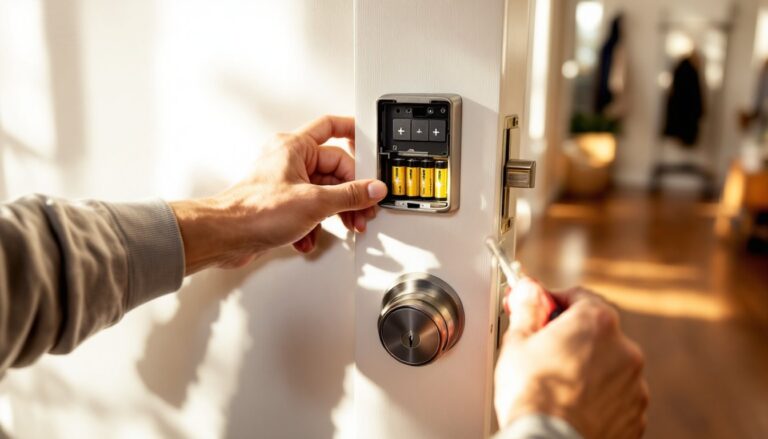
Battery life and low-battery alerts prevent lockouts. Most smart locks run on four AA batteries and last six to twelve months depending on usage. A lock that sends push notifications when the battery hits 20% gives plenty of time to swap in fresh cells before a guest arrives to a dead lock. Look for models with a backup power option, usually a 9V battery terminal on the exterior keypad, so a guest can tap a 9V to the lock, power it temporarily, and punch in their code.
Integration with property management software matters for hosts juggling multiple listings. Locks that sync with platforms like smart home automation systems can auto-generate and send codes when a new booking is confirmed, cutting manual entry time. Native integrations with Airbnb, Vrbo, or dedicated property management apps (like Hospitable or Guesty) streamline the entire workflow.
Installation should be straightforward. Most retrofit smart locks replace the interior thumb-turn and deadbolt assembly while leaving the exterior keyway intact, no new holes to drill in the door. Total install time runs 15 to 30 minutes with a screwdriver. Heavier motorized locks may require shimming if the door frame isn’t perfectly square, so check customer reviews for notes on fit issues with specific door brands.
Top Smart Lock Recommendations for Airbnb Properties
Best Overall: Schlage Encode Plus
The Schlage Encode Plus combines built-in Wi-Fi, a commercial-grade deadbolt (ANSI/BHMA Grade 1 rating), and compatibility with Apple Home Key, letting guests unlock the door by tapping an iPhone or Apple Watch to the lock. That’s a standout feature for tech-savvy travelers who’d rather skip PIN codes altogether. Hosts manage access codes through the Schlage Home app, which supports up to 100 user codes with individual schedules. The app sends real-time alerts when someone locks or unlocks the door, and the lock auto-locks after a set delay (adjustable from 15 to 120 seconds).
Installation fits standard 2⅛-inch bore holes and works with doors 1⅜ to 1¾ inches thick. The lock takes four AA batteries (included) and typically runs eight to ten months between changes. A low-battery warning appears in the app and on the keypad backlight (it flashes red). The exterior keypad includes a 9V battery port for emergency jump-starting. The Encode Plus lists around $300, which is mid-to-high in the smart lock market, but the absence of a monthly subscription for remote access justifies the upfront cost for many hosts.
Best Budget-Friendly: Wyze Lock Bolt
The Wyze Lock Bolt strips away the deadbolt mechanism and mounts directly to the door surface, making it a solid choice for rentals where the host doesn’t want to modify the existing lock hardware or for doors without a standard deadbolt bore. It’s a keypad-only lock (no traditional key backup), so it works best on secondary doors or properties where the host is comfortable relying entirely on codes and app access.
The lock supports up to 20 temporary or permanent access codes, scheduled via the Wyze app. Built-in Wi-Fi allows remote programming and monitoring without a hub. Battery life averages six months on four AA batteries, and the lock sends low-battery push notifications. An exterior keypad with a capacitive touchscreen resists weather and fingerprint smudging better than button-style keypads. The auto-lock feature engages after a user-defined period, and the app logs every unlock event with a date and time stamp.
Installation takes about 10 minutes: mount the strike plate on the door frame, attach the lock body to the door with four screws, and pair it via Bluetooth during initial setup. The Wyze Lock Bolt typically retails for under $80, making it one of the most affordable Wi-Fi-enabled locks on the market. The trade-off is durability, the plastic housing and surface-mount design won’t match the brute-force resistance of a metal deadbolt, so it’s better suited to low-risk locations or interior doors.
Best for Multiple Properties: Yale Assure Lock 2
The Yale Assure Lock 2 offers modular connectivity: buyers choose between a Wi-Fi module, a Zigbee module (for integration with hubs like SmartThings or Hubitat), or a Z-Wave module. That flexibility is a big plus for hosts who want to integrate locks into a broader smart home ecosystem or who manage properties with different platform requirements. The lock’s Yale Assure Lock 2 compatibility with Airbnb simplifies code management, when linked through the Yale Access app and a compatible property management tool, it can auto-generate guest codes tied to booking dates.
The lock supports up to 250 PIN codes, which is overkill for most single-property hosts but essential for property managers running dozens of units. Codes can be one-time, recurring, or permanent, with start and end times down to the minute. The capacitive touchscreen keypad lights up on approach and resists smudging and weather exposure. Inside, a motorized deadbolt locks and unlocks with a single button press or via the app. The lock auto-locks after a set delay and includes a tamper alarm that sounds if someone tries to pry the lock off the door.
Installation fits standard residential deadbolt prep (2⅛-inch bore, 1-inch or 1¼-inch latch backset). The lock runs on four AA batteries with a typical lifespan of eight months. A 9V terminal on the exterior keypad provides emergency power if the batteries die. The Yale Assure Lock 2 (with Wi-Fi module) runs around $280. There’s no subscription fee for basic app features, but advanced integrations (like automatic code generation tied to booking platforms) may require a third-party service fee depending on the property management software.
Installation and Setup Tips for Your Airbnb Smart Lock
Before drilling anything, confirm the lock fits the door. Measure the backset, the distance from the edge of the door to the center of the deadbolt hole, which is typically 2⅜ inches (standard residential) or 2¾ inches (common on older or commercial doors). Most smart locks include adjustable latch bolts to fit both, but double-check the product specs. Also measure door thickness: locks usually accommodate 1⅜ to 1¾ inches, but thicker or thinner doors may need spacers or extended screws.
Pull the old lock and inspect the strike plate and door frame. If the existing strike is loose or the screw holes are stripped, now’s the time to fill them with wood filler, let it cure, and re-drill pilot holes. A wobbly strike causes the smart lock’s deadbolt to bind, leading to motor strain and premature failure. Replace short hinge screws (the ones that come stock with most doors) with 3-inch screws that bite into the door frame’s stud, this reinforces the door against kick-in attempts and keeps everything aligned as the smart lock cycles.
When installing the new lock, don’t overtighten the mounting screws. Motorized locks need a little clearance to operate smoothly: cranking down the screws can warp the lock body and cause the deadbolt to drag. Hand-tighten screws until snug, then give them a quarter-turn with a screwdriver. Test the lock manually a few times to confirm the deadbolt extends and retracts without binding.
Pair the lock with its app before the first guest arrives. Walk through the full setup: create a master code, program a test guest code with a 24-hour expiration, lock and unlock the door remotely, and verify the activity log shows each event. Test the auto-lock feature by leaving the door unlocked for the set duration and confirming it latches on its own. If the lock includes voice assistant integration, test that too, some guests appreciate being able to ask Alexa or Google to unlock the door when they’re hauling luggage.
Document the guest code workflow. Many guests analyzing home tech trends expect clear instructions on how to operate smart locks. Include the access code in the pre-arrival message along with a note that the code expires at checkout. Add a laminated card by the interior lock with Wi-Fi credentials, the lock’s manual override instructions (if it has a physical key backup), and the host’s emergency contact number. That prevents 11 p.m. texts from guests who can’t figure out the lock.
Schedule a battery swap reminder every six months, even if the lock hasn’t flagged low power yet. Keep a pack of fresh AA batteries in a drawer or with the property’s maintenance supplies. If managing multiple properties, tag each lock with its install date and expected battery replacement date using a label maker or a note in the property management app.