Shopping for a smart lock is the easy part. Mounting one to your front door? That’s where homeowners hit a decision point. Most smart locks promise “easy DIY installation,” but older doors, non-standard backsets, or multi-point deadbolts can turn a 20-minute swap into an afternoon of trial and frustration. If the existing bore holes don’t line up, or the strike plate needs to be repositioned, you’re suddenly drilling into a door slab and hoping you don’t splinter the veneer. For many homeowners, hiring a professional installer makes sense, especially when you factor in warranty protection, proper alignment, and the peace of mind that your new lock will actually secure the door.
Table of Contents
ToggleKey Takeaways
- Professional smart lock installation near you typically costs $100–$250 for standard deadbolt replacement on wood doors, with prices climbing for specialized work like mortise lock conversions or metal door retrofits.
- Hiring a licensed locksmith or contractor ensures proper backset measurement, alignment, warranty coverage, and integration support—preventing motor binding, battery drain, and security failures from DIY mistakes.
- Verify installer credentials online through your state’s Department of Consumer Affairs, check specific smart lock experience (not just general handyman work), and review customer mentions of punctuality, troubleshooting, and cleanup.
- DIY smart lock installation works for standard pre-drilled doors with good condition, but hire a professional if your door is metal, fiberglass, mortise-locked, or requires new bore holes drilled.
- Ask installers about labor warranty (typically 30–90 days), what’s included in quotes (removal, network setup, hole patching), and door condition concerns before signing—and get at least three quotes to compare local market rates.
Why Hire a Professional for Smart Lock Installation?
Smart locks aren’t just drop-in replacements for mechanical deadbolts. They require proper backset measurement (the distance from the door edge to the center of the bore hole, typically 2-3/8″ or 2-3/4″), precise alignment of the latch mechanism, and sometimes minor modifications to the door or strike plate. If the installation isn’t square, the motor can bind, draining the battery or causing lockouts.
Professional installers handle non-standard door prep daily. Older homes may have oversized bore holes, metal-clad doors, or mortise locks that require adapters or entirely new drilling. An experienced tech will bring a hole saw kit, strike plate chisels, and templates to ensure clean, centered installation, tools most DIYers don’t own.
Warranty coverage is another reason to hire out. Some smart lock manufacturers void the warranty if installation damage occurs or if the lock fails due to improper mounting. A licensed locksmith or handyman typically carries liability insurance, so if something goes wrong, stripped screws, cracked door, or electrical issues with a POE (Power over Ethernet) model, you’re covered.
Finally, integration matters. Many platforms from smart home ecosystems require network configuration, Z-Wave or Zigbee hub pairing, or custom app setup. A pro can troubleshoot Wi-Fi signal issues, recommend mesh extenders, or configure access schedules and user codes during the install visit.
How to Find Qualified Smart Lock Installers in Your Area
Start with licensed locksmiths. Most carry smart lock inventory and offer installation as part of the service. Check state licensing requirements, many states require locksmiths to hold a surety bond and pass a background check. Verify credentials through your state’s Department of Consumer Affairs or equivalent agency.
Online platforms streamline the search. Homeowners can compare installers using contractor matching services that vet providers and display customer reviews, project photos, and average response times. Look for installers with specific smart lock experience, general handymen may lack familiarity with mobile credential setup or auto-unlock geofencing.
Local home security companies also install smart locks, often bundled with alarm system upgrades. If you’re adding a lock to an existing security ecosystem (Ring, ADT, Vivint), the company’s techs are already trained on integration and can link the lock to your monitoring panel.
Check reviews carefully. Look for mentions of punctuality, cleanup, and troubleshooting. A five-star review that says “showed up on time and connected my phone” is more useful than a generic “great job.” Red flags include repeated complaints about upselling, no-shows, or locks that stopped working within weeks.
Get at least three quotes. Pricing varies widely based on lock complexity, door condition, and travel distance. Some installers charge a flat rate: others bill hourly plus materials. Make sure quotes include disposal of the old lock and any needed hardware (longer screws, strike plate extenders, shims).
What to Expect: Smart Lock Installation Costs and Pricing
As of 2026, professional smart lock installation typically runs $100–$250 for a standard single-cylinder deadbolt replacement on a wood door with existing bore holes. That’s labor only, lock hardware is usually purchased separately, though some installers bundle it.
Costs climb if prep work is needed. Drilling a new bore hole (if switching from a knob to a deadbolt, or moving the lock up/down) adds $50–$100. Retrofitting a metal or fiberglass door can push labor to $200–$300, since cutting requires carbide bits and careful technique to avoid cracking the skin.
Multi-point locks or mortise lock conversions (common in older homes and commercial doors) are specialty jobs. Expect $300–$500+ for installation, as the locksmith may need to chisel a mortise pocket, fit a faceplate, and align multiple latch points.
If the smart lock requires low-voltage wiring (for continuously powered models or integration with existing doorbell transformers), add electrician rates: $75–$150/hour depending on region. Some high-security smart locks also need professional programming or enrollment in a master key system, which can add another $50–$100.
Geographic variation is significant. Urban markets with high labor costs (San Francisco, New York, Seattle) run 20–40% higher than rural areas. Always ask if the quote includes a service call fee (typically $50–$75), which may or may not roll into the final invoice.
Compare installation pricing alongside reviews on platforms like Angi to understand local market rates and avoid lowball bids that signal inexperience or unlicensed work.
Questions to Ask Before Hiring an Installer
Before signing a work order, confirm licensing and insurance. Ask for the license number and verify it online. Request a certificate of liability insurance (COI), legitimate contractors provide this without hesitation.
Ask about smart lock experience. “How many of [specific model] have you installed?” is a fair question. Some locks (August, Level, Schlage Encode) have unique quirks, calibration routines, app pairing steps, or firmware updates that must be completed on-site.
Clarify what’s included in the quote. Does it cover removal and disposal of the old lock? Will they patch or fill unused screw holes? Is network setup part of the service, or just the physical mount? Some installers stop after the lock is on the door and leave app configuration to the homeowner.
Ask about warranty on labor. A 30–90 day callback warranty is standard for installation work. If the latch sticks or the lock fails to latch within that window, the installer should return at no charge (assuming it’s not a defective product).
Discuss door condition. Show photos of your door, frame, and existing hardware. Ask, “Do you foresee any issues?” A good installer will flag potential problems, warped doors, loose frames, or incompatible backsets, before arriving on-site.
Finally, ask about payment terms. Most require payment upon completion. Be wary of anyone demanding full payment upfront, especially for a job under $300.
DIY vs. Professional Installation: Which Is Right for You?
DIY installation makes sense if you have a standard pre-drilled door, basic hand tools (Phillips screwdriver, tape measure, level), and the patience to follow instructions. Most smart locks ship with paper templates and step-by-step guides. Budget 30–60 minutes for a straightforward swap.
You’ll need the existing deadbolt removed and the door in good condition, no splits, no warping, and bore holes that match the new lock’s specs. If your current lock is the same brand or uses the same ANSI/BHMA Grade footprint, installation is usually plug-and-play.
Hire a pro if any of these apply: your door has no existing deadbolt and needs new holes drilled: the door is metal, fiberglass, or composite: you’re replacing a mortise lock: the door frame is damaged or loose: or you’re integrating the lock with a whole-home automation system (Control4, Crestron, Savant).
Professional installation also makes sense for rental properties or Airbnb units, where a botched install could mean lockouts, security gaps, or tenant complaints. Liability alone justifies the cost.
Don’t underestimate the value of troubleshooting support. If a DIY install goes sideways, stripped threads, misaligned latch, pairing failures, you’re on your own. A pro fixes issues on the spot and leaves with a working lock.
What Happens During a Professional Smart Lock Installation
Most installers start with a door and frame inspection. They’ll check for plumb, measure backset and cross-bore diameter, and test the existing latch for smooth operation. If the door sags or the frame is out of square, they may recommend shimming or hinge adjustment before mounting the lock.
Next, they remove the old hardware and clean the bore holes. Debris, old lubricant, or paint buildup gets scraped out. If the holes are oversized or off-center, the installer may use a hole saw to enlarge them uniformly or install a door reinforcer plate to provide a fresh mounting surface.
The new lock goes in with the exterior escutcheon first, followed by the interior assembly. The installer aligns the tailpiece (the spindle that actuates the deadbolt) and secures both halves with machine screws. Longer screws, often 3-inch #8 or #10, anchor into the door edge or a solid wood core, not just the veneer.
Strike plate installation is next. The installer chisels a mortise if needed, ensuring the latch bolt fully extends into the plate without binding. For added security, they may use 3-inch strike screws that reach into the wall stud behind the door frame.
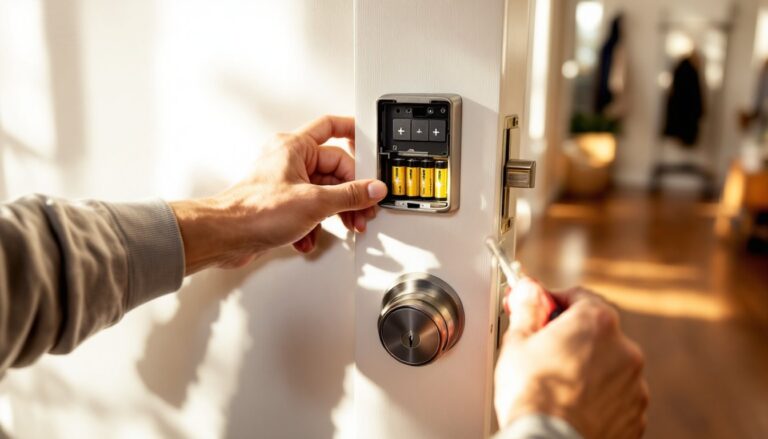
Finally, the tech tests the lock mechanically (key, thumb turn, manual latch) before powering it on. They’ll install batteries, pair the lock with your phone via Bluetooth or Wi-Fi, set user codes, and verify auto-lock, geofence, and remote access features. Most run through the app with you, demonstrating how to add or delete codes, check battery status, and review access logs.
Cleanup includes vacuuming up wood shavings, wiping down the door, and disposing of old hardware. The whole process typically takes 45 minutes to 90 minutes depending on complexity.
Conclusion
Hiring a professional for smart lock installation isn’t always necessary, but it’s often the smartest call, especially when door prep, integration, or warranty protection matter. Get multiple quotes, verify credentials, and ask detailed questions about what’s included. Whether you’re upgrading one entry door or outfitting a multi-unit property, the right installer turns a potential headache into a half-hour appointment and a lock that works the first time, every time.